

Losing weight is not always as simple as eating less and exercising more. For many individuals, obesity is influenced by hormonal, metabolic, and medical factors that complicate weight loss.
Today, two commonly recommended treatment options are weight loss medications and bariatric surgery. While both aim to support weight reduction, they work in different ways and offer different long-term outcomes.
Understanding how each option works can help you make a more informed decision about your health.
How Do Weight Loss Medications Work?
Weight loss medications, including GLP-1 receptor agonists, help regulate appetite and improve how your body processes food. These medications act on hormones that control hunger and fullness, making it easier to reduce calorie intake.
They can:
- Reduce appetite
- Help you feel full sooner
- Slow stomach emptying
- Improve blood sugar control
When combined with lifestyle changes such as diet and exercise, these medications can support gradual and steady weight loss. However, they often need to be taken long-term. If the medication is stopped, some individuals may regain weight.
Medical supervision is important to ensure the treatment is safe and effective for your condition.
How Does Bariatric Surgery Work?
Bariatric surgery is a medical procedure that changes how your digestive system functions to support weight loss. It is typically recommended for individuals with higher BMI or obesity-related health conditions.
Common procedures include:
- Sleeve gastrectomy (Gastric Sleeve): Around 75% to 85% of the stomach is removed, leaving a smaller, sleeve-shaped stomach. This helps you feel full sooner and reduces hunger hormones.
- Roux-en-Y Gastric Bypass: A small stomach pouch is created and connected directly to the small intestine. This reduces the amount of food you can eat and limits calorie absorption.
- Endoscopic Sleeve Gastroplasty (ESG): This is a minimally invasive, non-surgical procedure. An endoscope is passed through the mouth, and stitches are placed inside the stomach to make it smaller, helping you feel full with less food.
These procedures work by:
- Reducing the size of the stomach
- Limiting how much food you can eat
- Altering hormones that control hunger and fullness
- Supporting long-term weight management
In addition to weight loss, bariatric surgery Singapore may also improve conditions such as type 2 diabetes, high blood pressure, and sleep apnoea. Patients usually receive ongoing follow-up care, including nutritional guidance, to maintain results.
Bariatric Surgery vs Weight Loss Medications
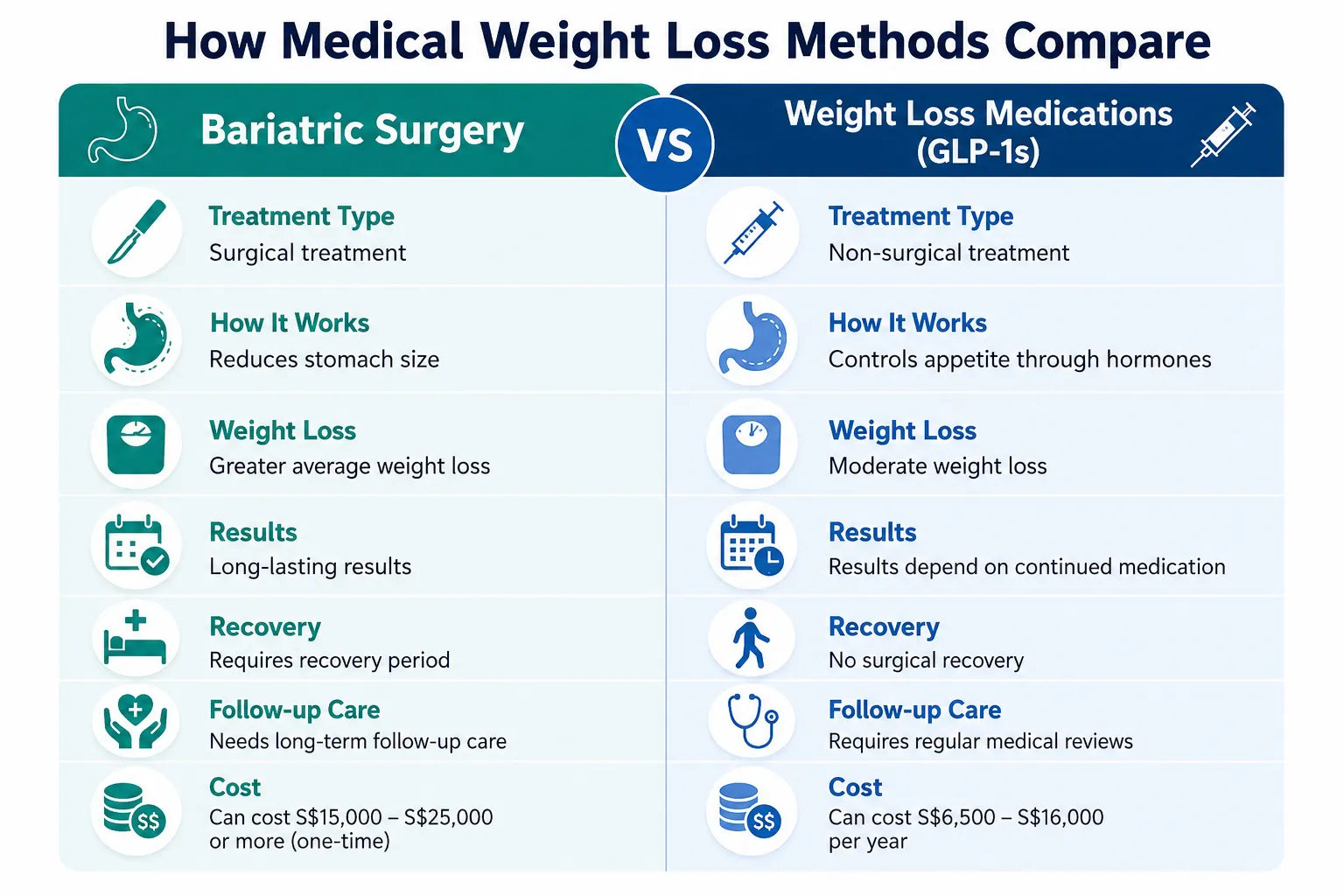
| Bariatric Surgery | Weight Loss Medications (GLP-1s) |
|---|---|
| Surgical procedure | Weekly or regular injections |
| Reduces stomach size to limit food intake | Slows stomach emptying and helps reduce appetite |
| Usually results in greater and more sustained weight loss | Supports gradual weight loss while treatment continues |
| Higher upfront cost | Ongoing cost for continued medication |
| May carry surgical risks such as bleeding, infection, or stomach leakage | Common side effects include nausea, vomiting, diarrhoea, or constipation |
| Requires lifelong nutritional supplements and regular follow-up | May require long-term or lifelong use to maintain weight loss |
Both treatments can help people manage obesity, but they work in different ways. The most suitable option depends on your overall health, weight-loss goals, existing medical conditions, and your doctor’s recommendation.
Which Option May Be Right for You?
Choosing between medication and surgery depends on several factors. Your doctor will assess your overall health and medical history before recommending a treatment plan.
Factors that may be considered include:
- Body mass index (BMI)
- Presence of type 2 diabetes
- High blood pressure
- Sleep apnoea
- Fatty liver disease
- Previous weight-loss attempts
- Willingness to commit to long-term lifestyle changes
A detailed consultation allows you to understand the benefits, risks, and expected outcomes of each option.
Can Bariatric Surgery and Weight Loss Medications Be Used Together?
In some cases, both treatments may be used together as part of a comprehensive plan.
For example:
- Medication may be used before surgery to reduce weight and improve surgical safety.
- Medication may help manage weight regain after surgery.
- Treatment plans may be adjusted over time based on progress and health status.
Combining approaches can provide additional support, but this should always be guided by a qualified medical professional.
Choosing the Right Treatment
Weight loss medications and bariatric surgery can both support long-term weight management. The right option depends on your health, medical history, and personal goals. A consultation with a doctor can help you understand which treatment is suitable for you.
At Arden JR Surgery, our team takes a personalised approach to obesity care. We will discuss your concerns, explain your options, and help you make an informed decision. Contact us today to schedule a consultation and begin your journey to better health.